25 Haircuts Ideas for Long Faces That Flatter Your Features
Finding a haircut that complements a long or oblong face shape is all about creating visual balance. The best haircuts ideas for long faces do not need to hide your natural features. Instead, they use layers, bangs, texture, movement, and carefully placed volume to create a flattering overall shape.
If your face looks longer than it is wide, adding width around the cheeks and sides can help balance the proportions. Face-framing layers can draw attention toward the middle of the face, while bangs can visually break up the length of the forehead. The right haircut can also make your natural hair texture work in your favor, whether you have straight, wavy, curly, thick, or fine hair.
From chin-length bobs and shoulder-length layers to butterfly cuts, shaggy styles, pixies, and long layered looks, there are plenty of options to explore. Below, you will find 25 haircut ideas along with practical guidance for choosing the right length, layers, bangs, and styling approach for a long face.
25 Best Haircuts Ideas for Long Faces
1. Shoulder Length Haircut With Face Framing Layers
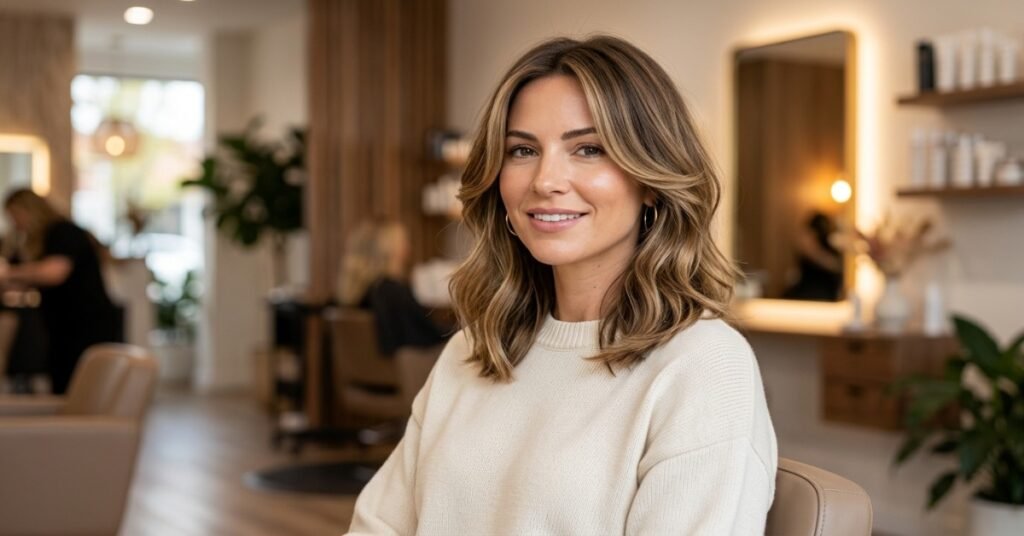
A shoulder-length haircut with face-framing layers is a versatile choice for a long face. The length provides enough hair for movement, while layers around the cheekbones and jawline can add width and softness.
This style works especially well when the ends have a gentle wave or outward bend. Instead of allowing the hair to fall completely flat, soft texture gives the sides more fullness.
Ask your stylist for blended layers that frame your face without removing too much length. This makes the cut easy to adapt to both straight and wavy hair.
2. Long Layers With Curtain Bangs
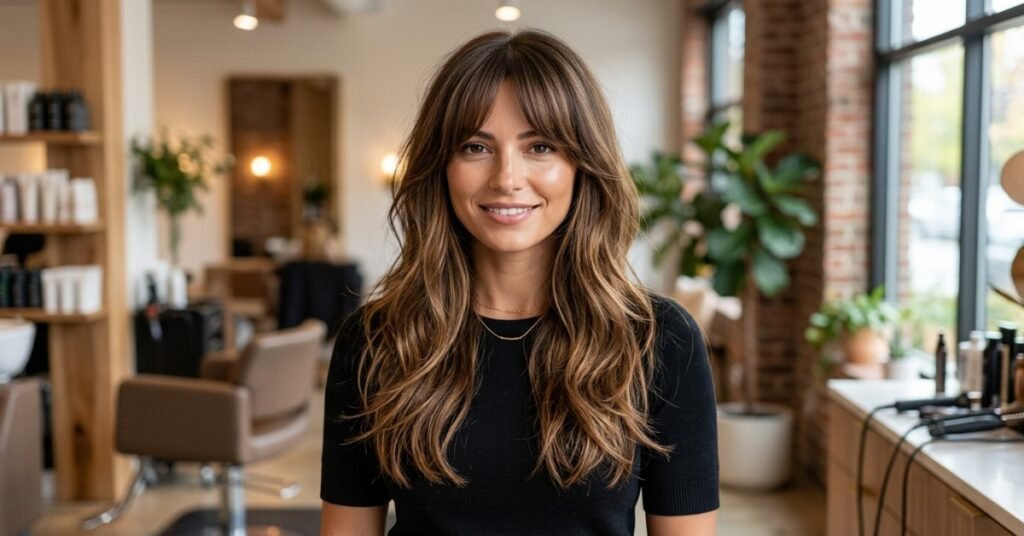
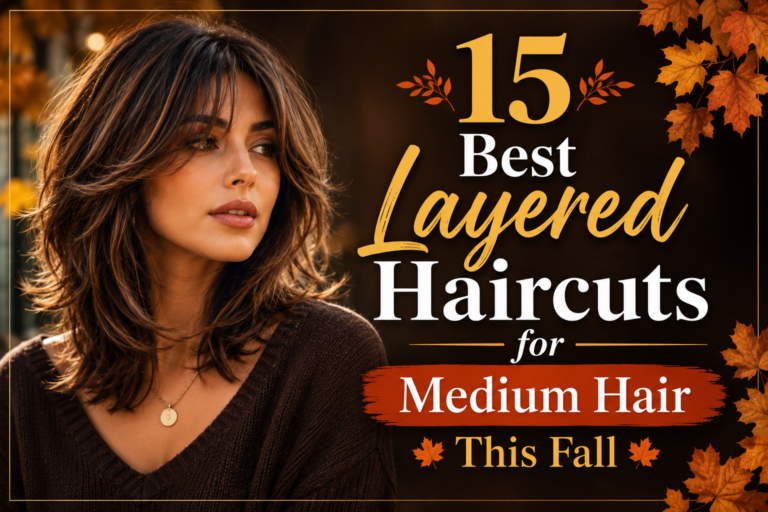
Long layers with curtain bangs combine length with face-framing detail. The longer layers keep your hair flowing, while the shorter pieces around the forehead and cheeks help break up the appearance of vertical length.
Curtain bangs can be parted in the center or slightly off-center and blended into the surrounding layers. For a softer result, have them gradually lengthen toward the sides of the face.
Loose waves can make this haircut even more flattering by creating movement across the cheeks instead of leaving the hair completely straight and flat.
3. Chin Length Bob
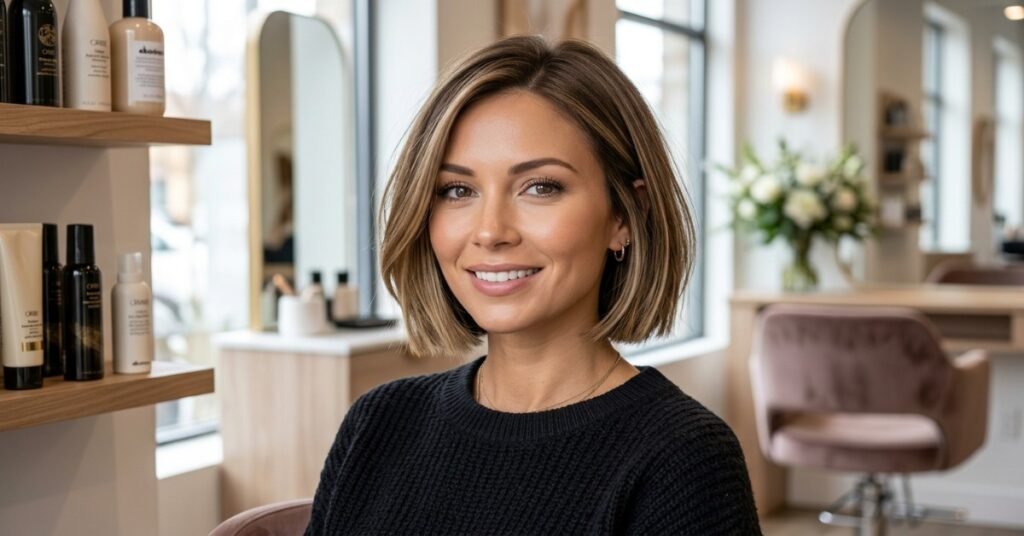
A chin-length bob creates a strong horizontal shape around the lower part of the face. This can help introduce visual width while giving the haircut a polished and defined appearance.
You can wear a chin bob sleek and straight or add soft waves for additional fullness. A slight curve toward the jawline can also give the style a rounded finish.
For naturally curly hair, a softly rounded bob can provide volume around the sides. The exact length should be customized to your curl pattern because curls can appear shorter after drying.
4. Layered Bob With Side Swept Bangs
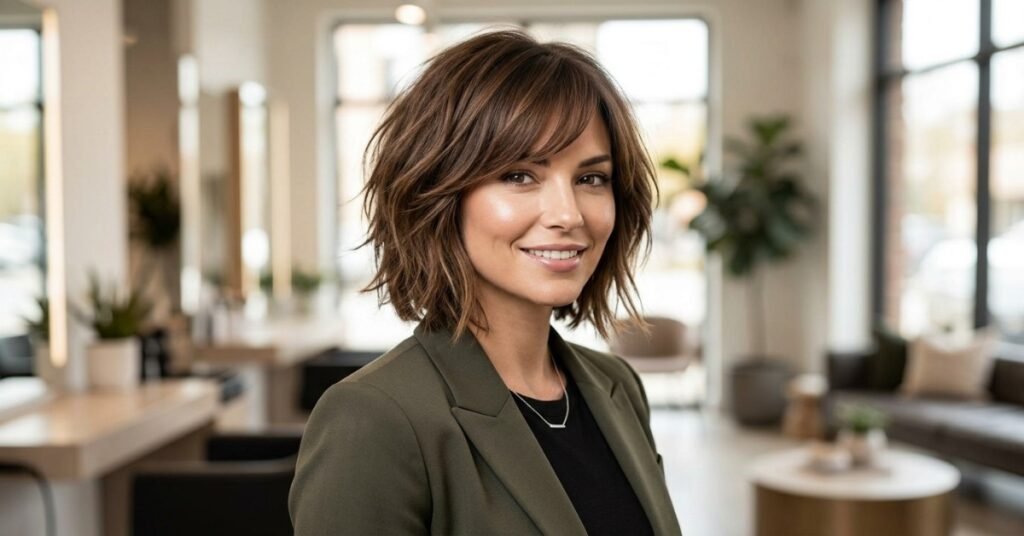
A layered bob with side-swept bangs adds movement from several directions. The layers keep the bob from looking too solid, while the diagonal direction of the bangs can draw attention across the face.
A length around the chin or slightly below can work well when you want fullness near the lower face. Soft texture can also make the style look less severe.
This is a practical choice for someone who wants a shorter haircut but still prefers enough length around the face for styling flexibility.
5. Classic Long Bob or Lob
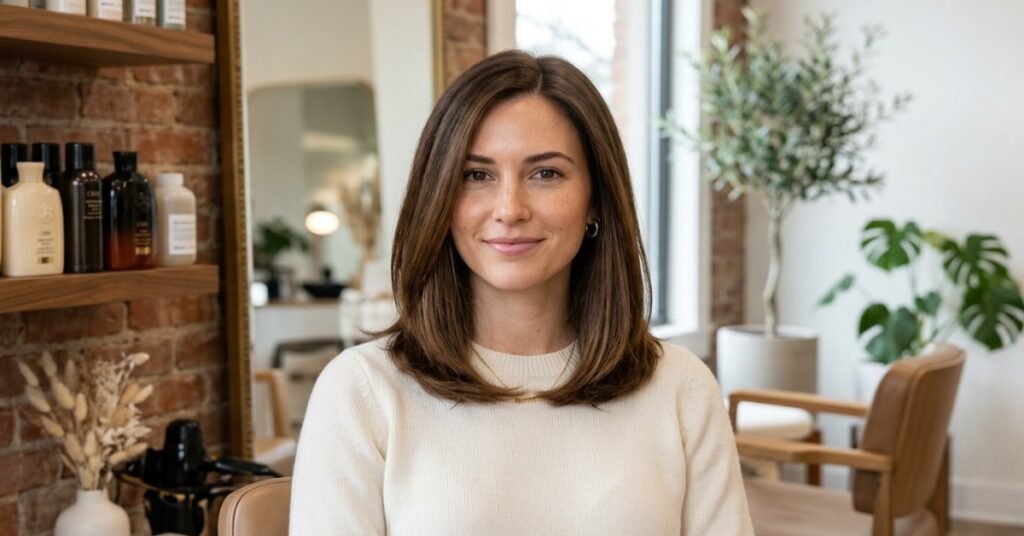
The classic lob is one of the most adaptable haircuts for long faces because it sits between a short bob and longer hair. It gives you enough length for waves, a ponytail, or different parting options.
A lob can be worn straight or textured with loose waves. Face-framing layers can prevent it from looking like one uninterrupted vertical line.
Adding curtain bangs or a side part can further change the shape of the haircut. For a simple everyday style, a collarbone-length lob with subtle layers is an easy option.
6. Butterfly Haircut
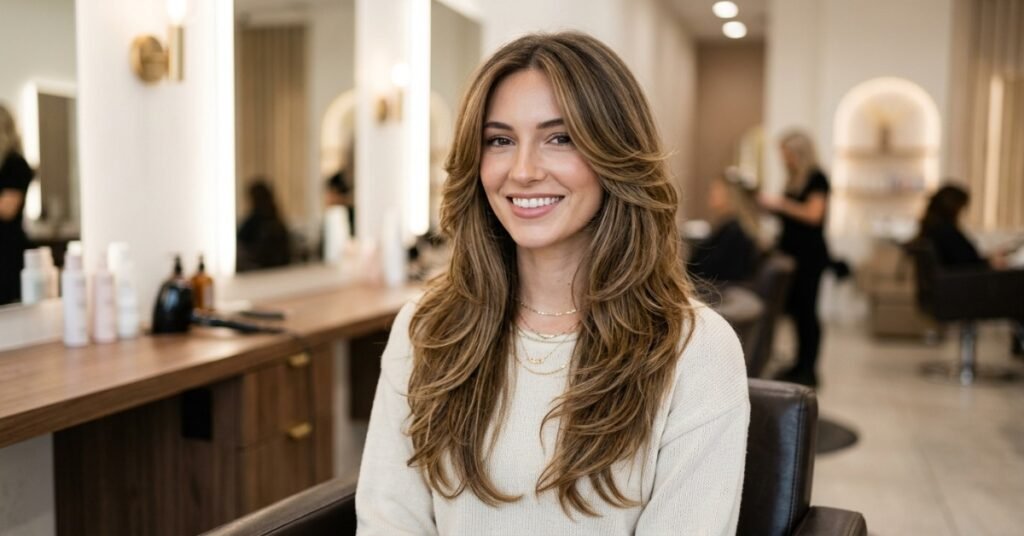
The butterfly haircut combines shorter face-framing layers with longer layers underneath. This creates movement around the face while allowing you to keep considerable length.
The shorter layers can begin around the cheekbones or lower face, depending on your features and the amount of framing you prefer. The longer layers maintain the flowing appearance of long hair.
A soft blowout or loose waves can emphasize the layered shape. This haircut is particularly useful if you want a noticeable change without giving up your long hair.
7. Shag Haircut With Soft Layers
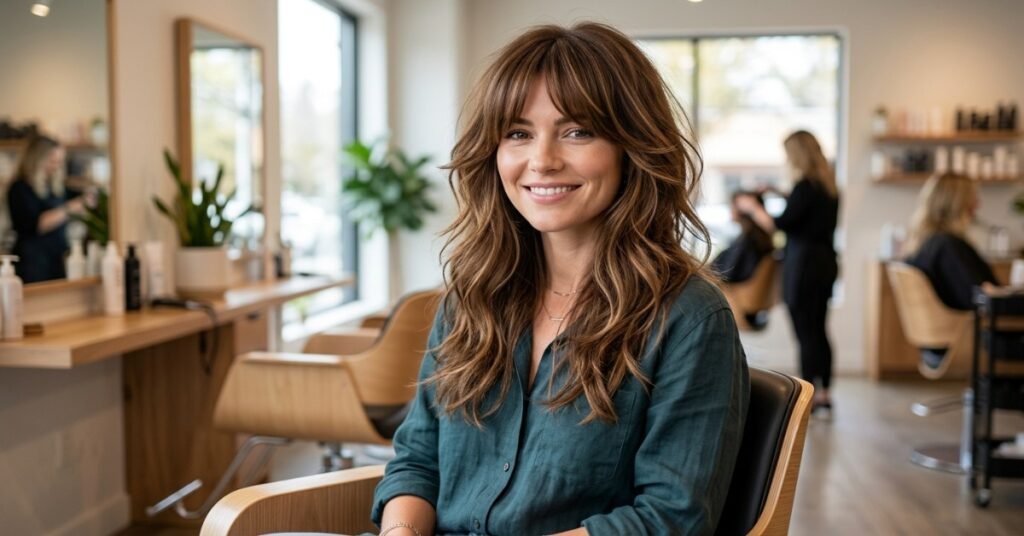
A shag haircut uses multiple layers and texture to create a relaxed, dimensional shape. Soft versions of the shag can add movement around the sides of a long face without making the haircut feel overly dramatic.
The layers can be adjusted according to your hair density. Thicker hair may support more texture, while fine hair can benefit from strategically placed layers that preserve fullness.
Natural waves work beautifully with this style. A small amount of styling cream or texture product can help define the layers while keeping the finish effortless.
8. Curly Shag for Long Faces
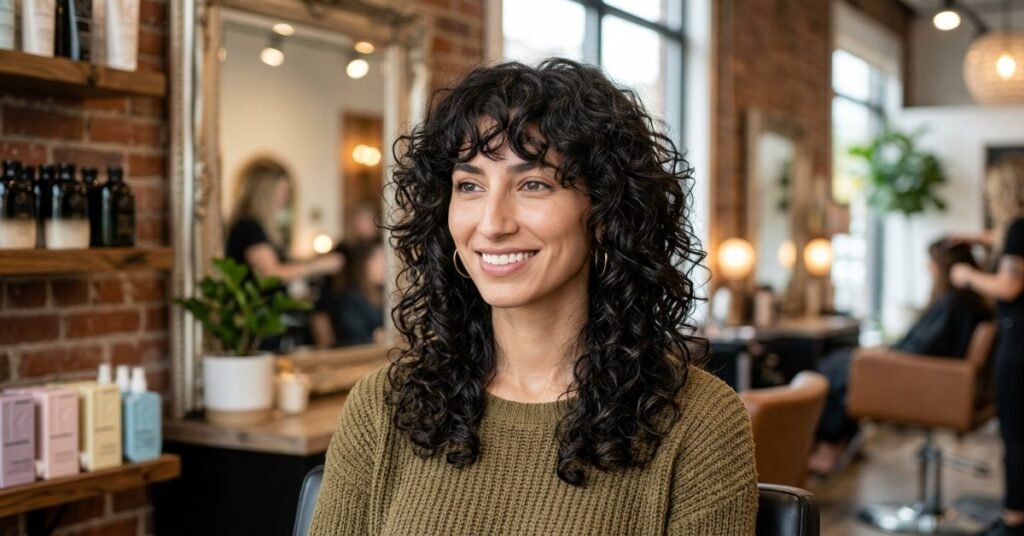
A curly shag combines layered shaping with natural curl volume. Because curls naturally expand outward, they can create fullness around the sides of the face.
The placement of the layers matters. Too much height concentrated at the crown can change the overall proportions, while balanced layers around the sides can create a softer silhouette.
If you have curly hair, work with your natural curl pattern when deciding the length of each layer. A stylist familiar with curly cutting techniques can help maintain the shape after the curls dry.
9. Layered Long Curls
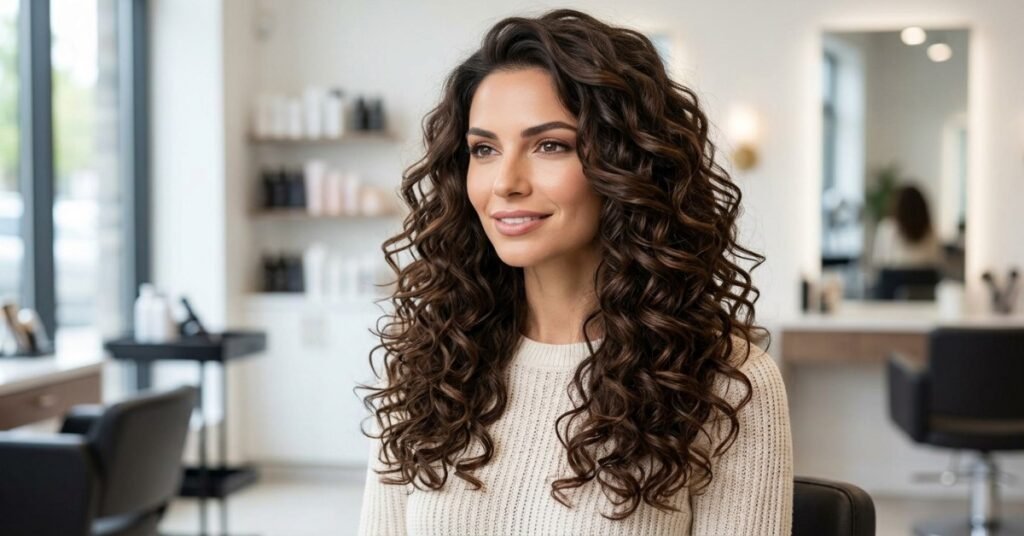
Long curls can look flattering on a long face when they have enough layering and movement. Without layers, heavy curls may fall downward and create a narrow vertical shape.
Face-framing pieces can bring attention toward the cheekbones and jawline. Layers throughout the lengths can also help the curls expand naturally rather than hanging as one heavy section.
Wispy bangs can be incorporated if you want additional framing around the forehead. For curly hair, remember that the finished length may change significantly after the curls dry.
10. Face Framing Medium Haircut
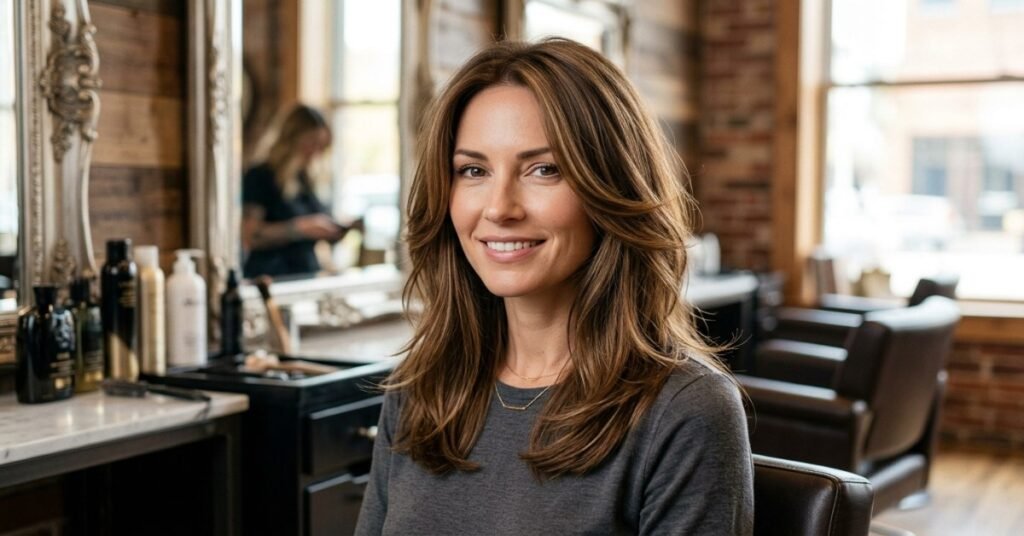
A medium haircut with face-framing layers offers a balanced option for anyone who does not want very short or very long hair.
The face-framing pieces can begin around the cheekbones, jawline, or another point that works with your facial proportions. The rest of the hair can remain around the shoulders or collarbone.
Soft waves can add extra width, while a slightly off-center or side part can create additional movement. This style is also easy to adapt to different hair textures.
11. Deep Side Part Haircut
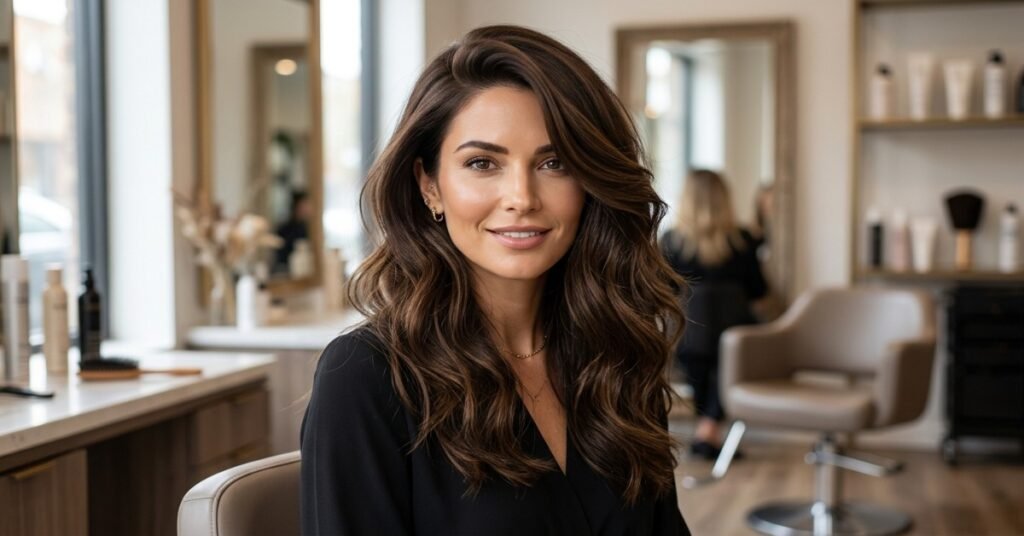
A deep side part can change the appearance of almost any haircut without requiring a major cut. Instead of directing the hair straight downward, it creates a strong diagonal line across the face.
This works particularly well with bobs, lobs, shoulder-length styles, and long layered hair. The heavier side can also create more volume, especially when the hair tends to fall flat.
If you are looking for a simple change before committing to a new haircut, try moving your part first and see how the added asymmetry changes the overall shape.
12. Side Swept Pixie
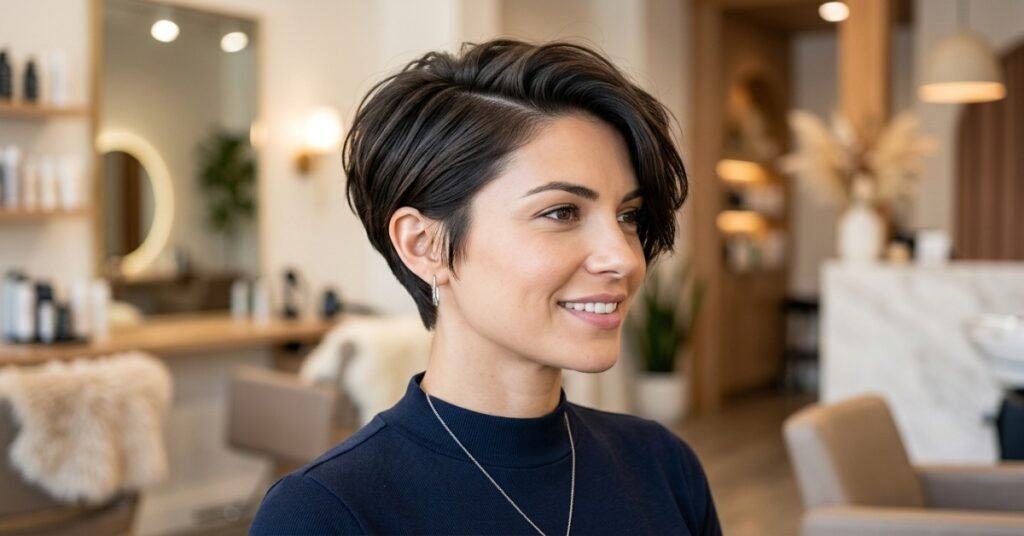
A side-swept pixie gives you the convenience of short hair while keeping some length and movement around the front. The longer top or fringe can be swept across the forehead rather than styled straight upward.
This creates a more directional shape and can soften the appearance of a very short haircut. Keeping some fullness around the sides can also help maintain balance.
The style can be textured for a modern finish or smoothed for a more polished appearance. Your stylist can adjust the length according to your hair density.
13. Curly Pixie Cut
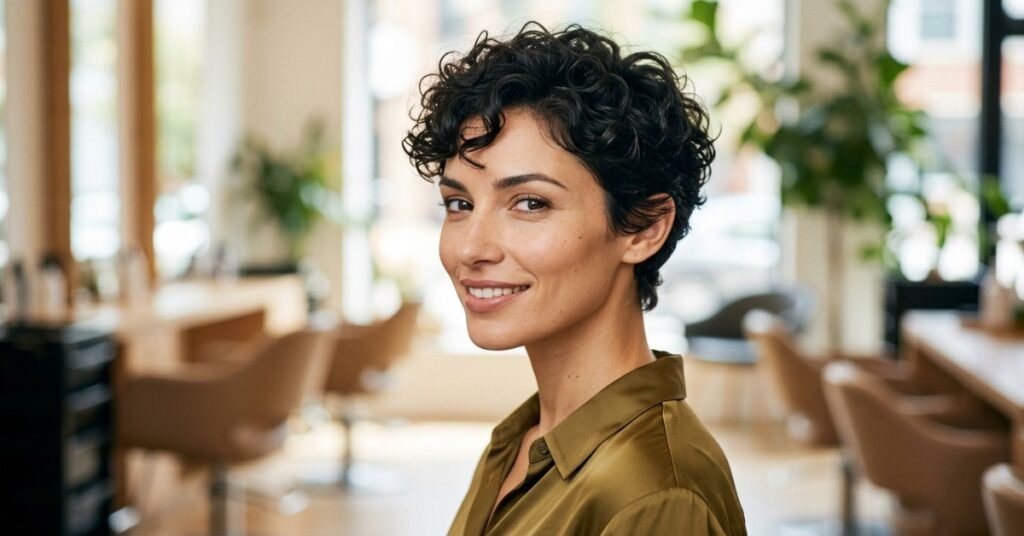
A curly pixie allows natural curls to provide volume and texture in a short haircut. Instead of relying on long hair to create shape, this style uses the natural expansion of curls.
The sides and top can be customized according to your curl pattern. Maintaining some volume around the sides can create a balanced silhouette.
Curly pixies require an understanding of how your hair behaves when dry. Discuss your natural curl shrinkage with your stylist before choosing the final length.
14. Bixie Haircut
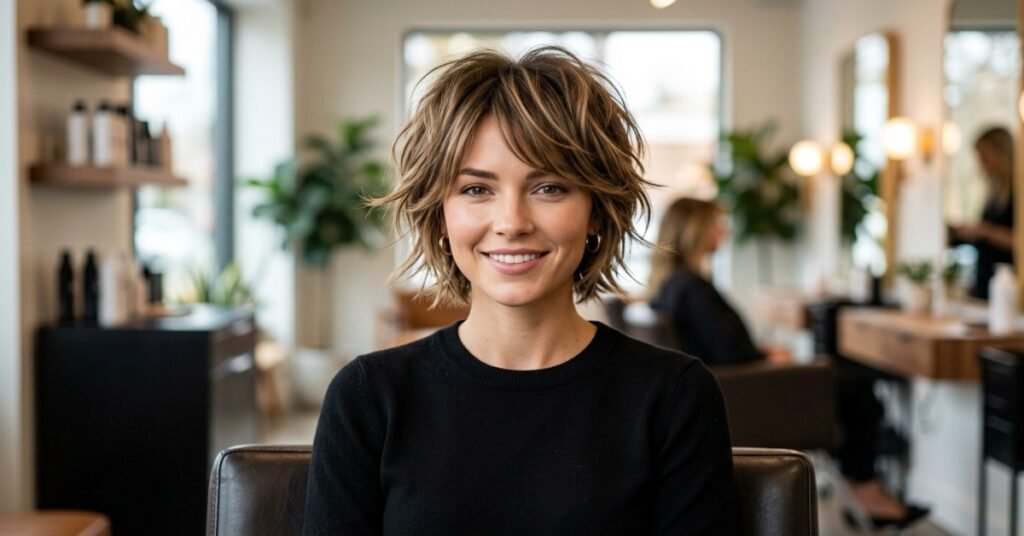
The bixie combines the structure of a bob with the shorter shape of a pixie. It offers more length around the face than many traditional pixie cuts, giving you plenty of room for texture and styling.
For a long face, a bixie can be shaped with fullness around the cheeks and sides. Avoid creating unnecessary height at the crown if your goal is a balanced silhouette.
A slightly tousled finish can make the haircut look modern and effortless. Straight, wavy, and lightly curly textures can all be adapted to this shape.
15. Chin Grazing Bob With Wispy Bangs

A chin-grazing bob paired with wispy bangs combines a defined lower shape with a soft forehead frame. The bob creates width near the jawline, while the lightweight bangs visually interrupt the forehead.
This combination can be worn sleek or slightly tousled. Soft waves can make the sides appear fuller and give the haircut a more relaxed appearance.
Wispy bangs are also easier to blend into the rest of the haircut than a heavy blunt fringe, making this a good option if you want a softer change.
16. Bardot Bangs With Long Layers
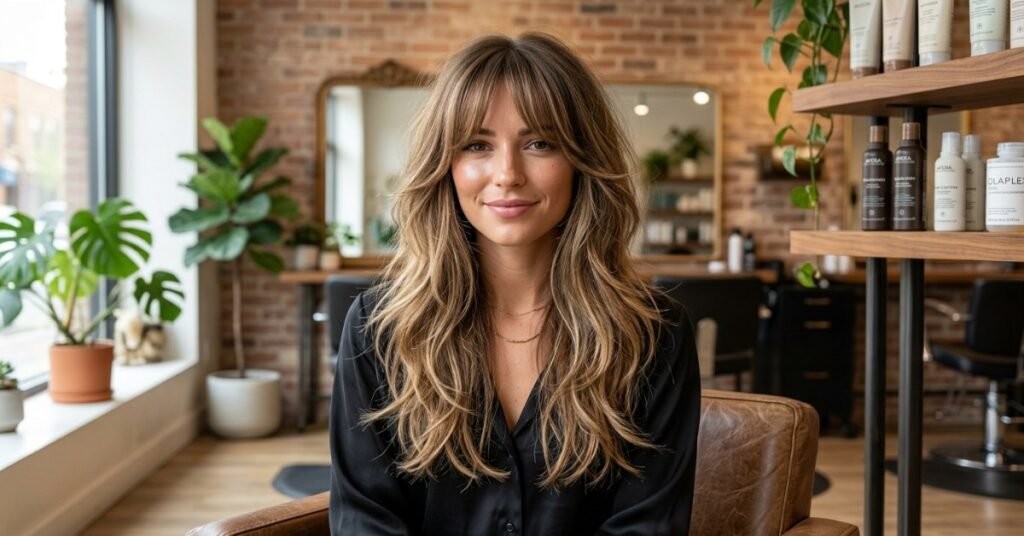
Bardot-inspired bangs create a relaxed, parted fringe that transitions into longer face-framing layers. Combined with long hair, they give you a way to maintain length while adding shape around the face.
The bangs can be styled with a gentle lift at the roots and blended outward toward the cheeks. Long layers underneath keep the haircut flowing.
This style works especially well with a soft, slightly undone finish. Loose waves can enhance the movement created by the layers and fringe.
17. Curtain Bangs With Shoulder Length Hair
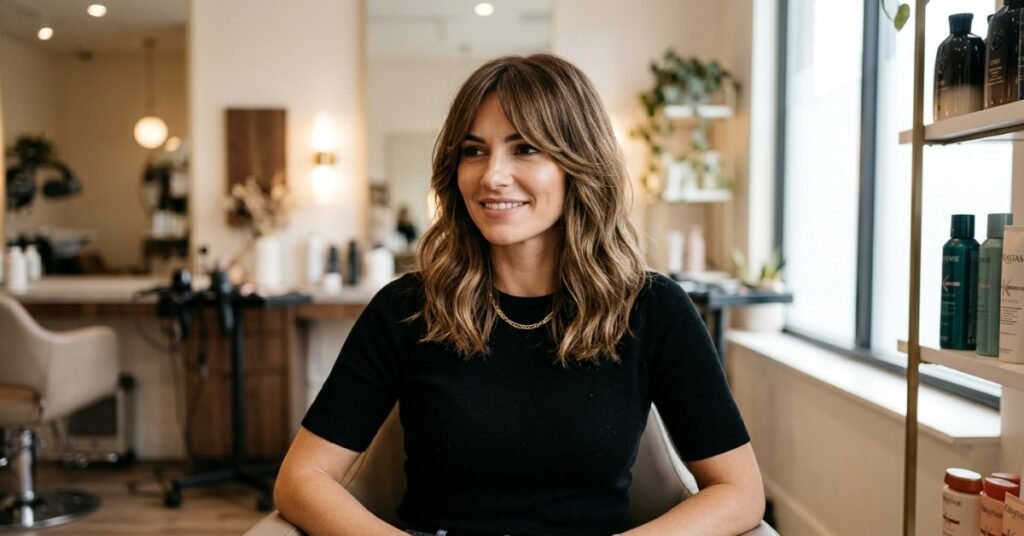
Curtain bangs paired with shoulder-length hair offer a balanced combination of framing and manageable length. The bangs create detail around the forehead and cheeks, while the shoulder-length cut provides enough volume for movement.
The style can be worn with a center part or slightly shifted part. For extra softness, curl the ends away from the face or add loose waves through the lengths.
This is also a practical choice if you want to experiment with bangs without committing to a very short fringe.
18. Blunt Bangs With Medium Hair
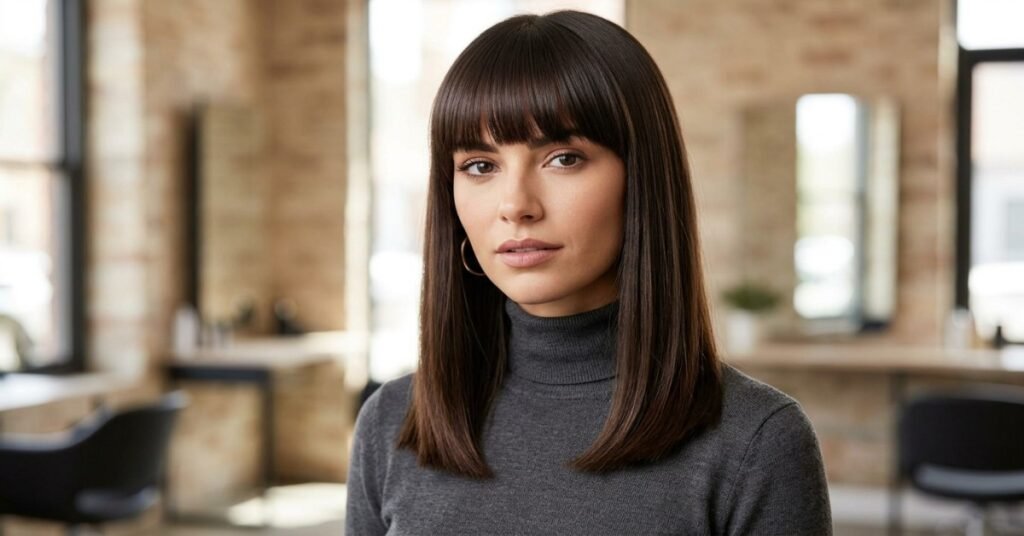
Blunt bangs create a clear horizontal line across the forehead, while medium-length hair provides enough length for movement below the face.
The contrast between the straight fringe and textured ends can create a modern look. If your hair is naturally straight, the haircut can appear sleek and polished. With waves, it becomes softer and more relaxed.
The exact fringe length should be customized to your forehead and facial proportions rather than following one fixed measurement.
19. Asymmetrical Bob
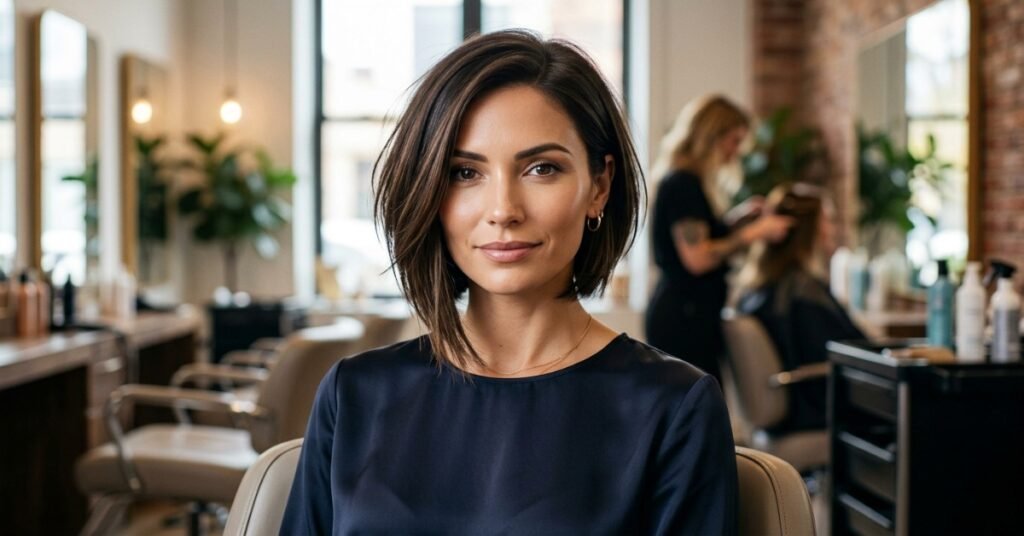
An asymmetrical bob uses slightly different lengths on each side to create an uneven visual line. This can add interest and prevent the haircut from appearing overly uniform.
A deep side part can strengthen the asymmetrical effect, while soft waves can give the longer side additional volume.
The difference between the two sides does not need to be dramatic. Even a subtle variation can make a classic bob feel more dynamic and personalized.
20. Layered Shoulder Cut
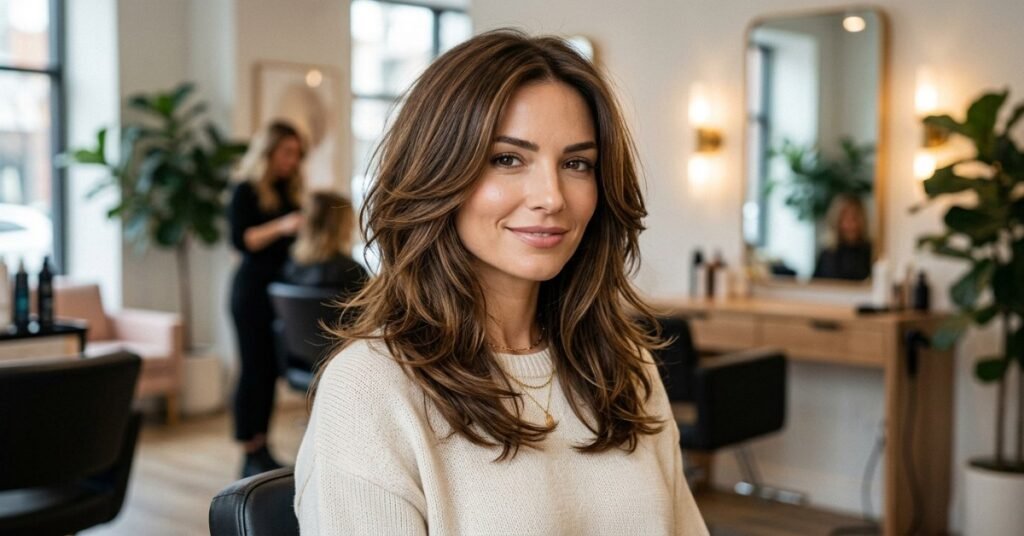
A layered shoulder cut is a versatile option for someone who wants medium-length hair with plenty of movement. Layers can be concentrated around the face while the overall length remains close to the shoulders.
The haircut works with straight, wavy, and lightly curly textures. Soft waves can create extra fullness around the sides, while a smooth finish gives the style a more polished appearance.
Face-framing layers can also be customized to begin around the cheekbones or jawline.
21. Voluminous Wavy Lob
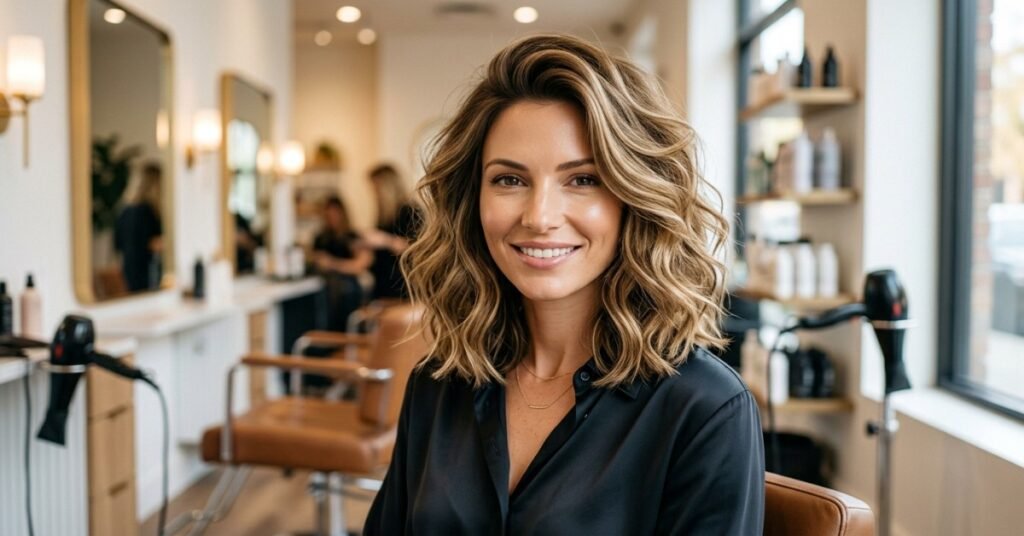
A wavy lob combines the practicality of a long bob with the width created by soft waves. The waves help the hair move outward rather than simply falling vertically.
Keep the waves loose and natural instead of creating excessive height at the crown. The goal is to distribute volume through the sides and lengths.
A side part can make the hairstyle appear even fuller on one side. This makes the wavy lob an adaptable option for both casual and polished looks.
22. Collarbone Length Layered Cut
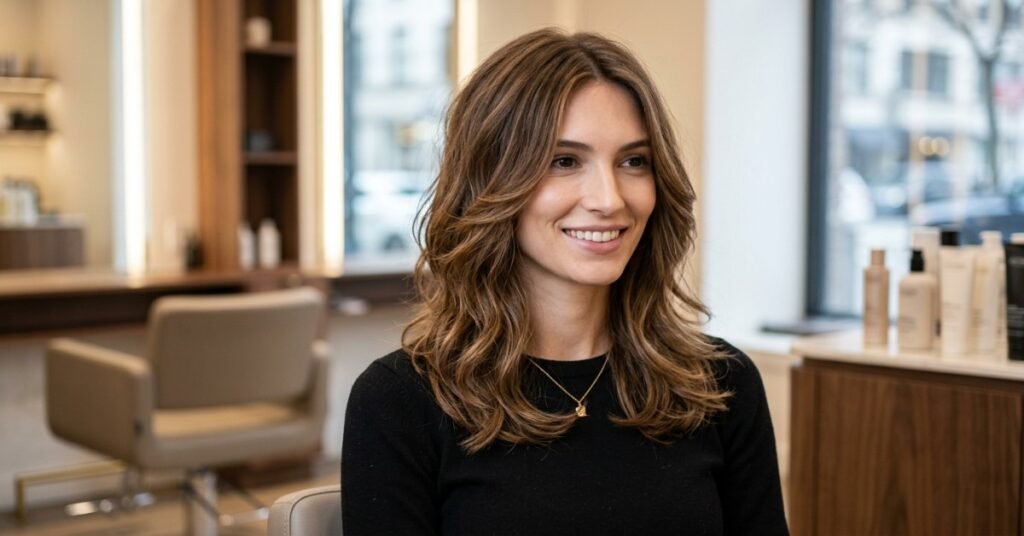
A collarbone-length cut offers enough length for versatility while avoiding the heaviness that can sometimes occur with very long, one-length hair.
Subtle layers around the face can add movement without making the haircut look heavily layered. Soft bends through the ends can create additional width.
This length works particularly well if you want a haircut that can be worn down, tucked behind the ears, or pulled into simple updos.
23. Long Hair With Side Swept Layers
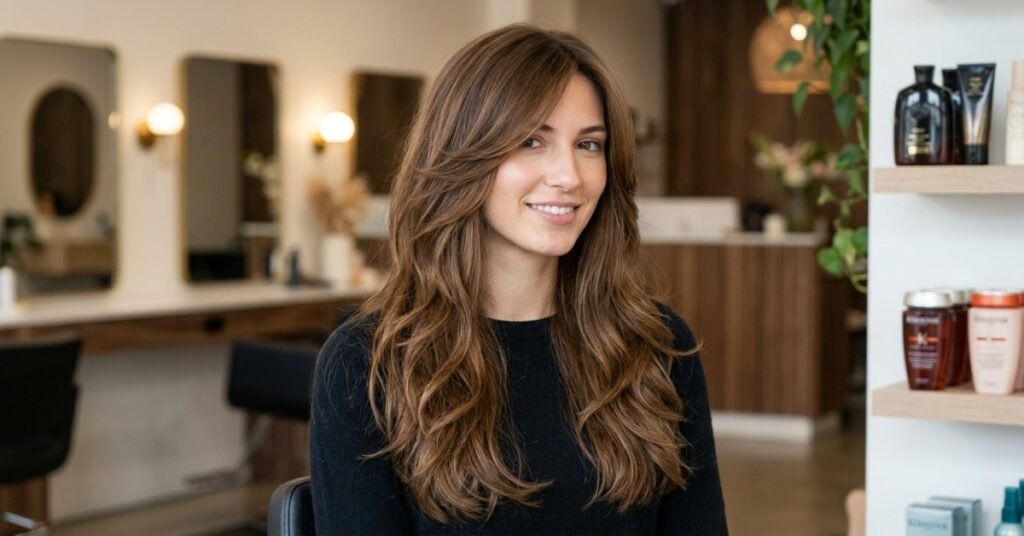
Long hair can work beautifully with a long face when it includes layers and directional movement. Side-swept layers create a diagonal visual line and help keep the style from looking completely vertical.
The shortest face-framing sections can be placed around the cheekbones or jawline. The remaining layers can gradually increase in length.
Loose waves can emphasize the side-swept shape, while a deep side part can add even more movement.
24. Rounded Curly Bob
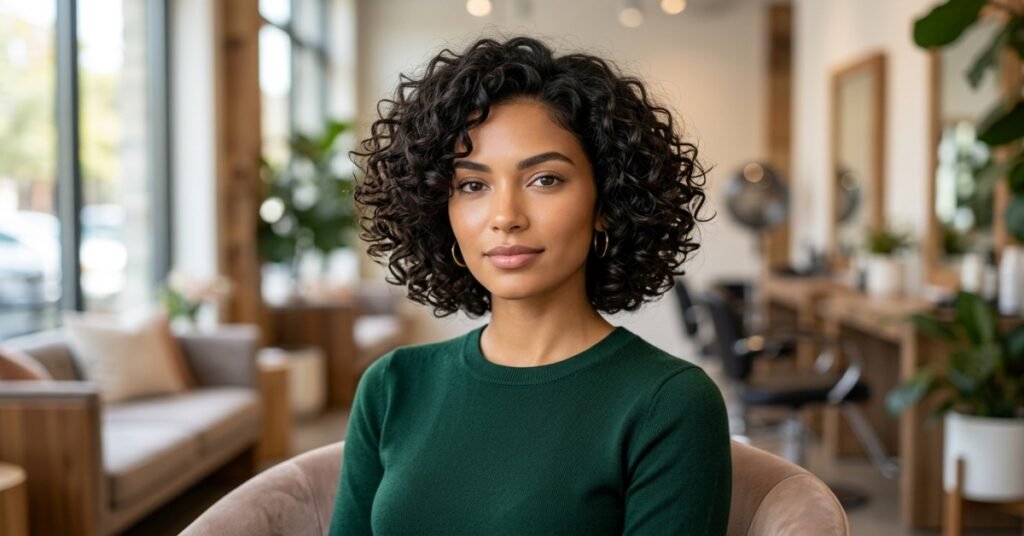
A rounded curly bob creates volume around the sides while maintaining a defined shorter shape. The rounded silhouette can work particularly well for curly hair because the curls naturally build fullness.
The exact length should be chosen according to how much your curls shrink. A stylist can shape the bob so that it maintains its intended outline when dry.
Avoid forcing the curls into a completely flat shape. Allowing natural texture to create fullness can make the haircut look more dimensional.
25. Soft Butterfly Layers With Curtain Fringe
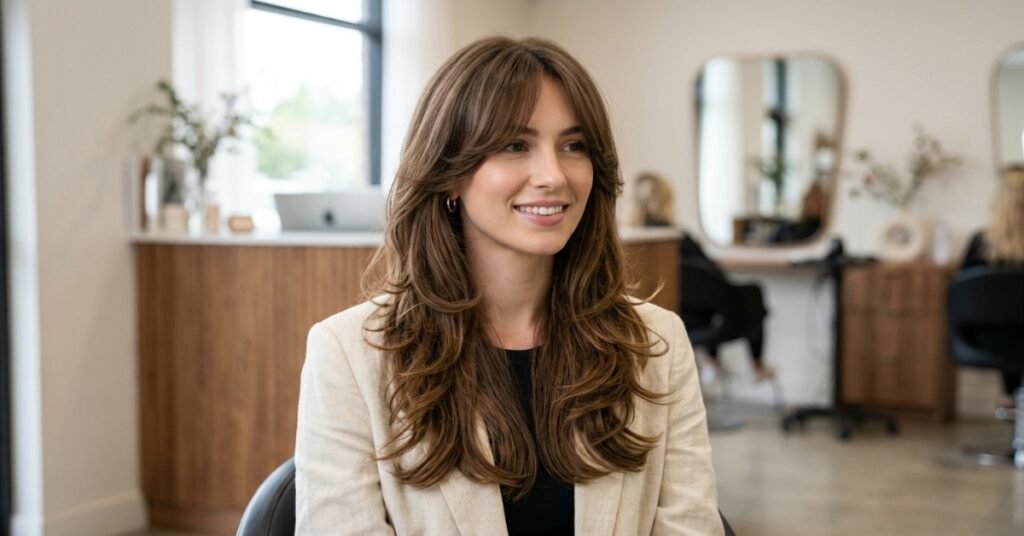
Soft butterfly layers combined with curtain fringe create a highly face-framed version of the popular layered haircut. Shorter pieces around the face provide movement, while longer layers preserve the length.
The curtain fringe blends into the shorter layers, creating a continuous frame from the forehead toward the cheeks.
This style is especially useful if you want a feminine, flowing haircut without sacrificing long hair. Soft waves or a blowout can emphasize the different layers.
How to Choose the Best Haircut for a Long Face
Choosing the right haircut is about more than picking a popular style. Your hair length, natural texture, layer placement, and preferred styling routine all affect how the final haircut looks.
Consider Your Hair Length
Short, medium, and long hair can all complement a long face. Chin-length bobs can create width around the lower face, while shoulder-length cuts provide a balance between movement and length.
Long hair can also work well when combined with layers, bangs, or face-framing pieces. Instead of focusing only on length, consider where the haircut creates fullness.
Consider Your Hair Texture
Your natural texture should play an important role in your decision.
Straight hair can benefit from layers, waves, bangs, or a side part. Wavy hair already provides natural movement and can work beautifully with shags, lobs, and layered cuts.
Curly hair can create natural side volume, while thick hair may need carefully placed layers to manage bulk. Fine hair often benefits from strategic layering that maintains as much density as possible.
Think About Where Your Layers Start
Layer placement can change the entire appearance of a haircut. Layers beginning around the cheekbones can bring attention toward the middle of the face, while jawline layers can add fullness lower down.
Shoulder-level layers can create movement throughout medium-length hair. If you want to avoid emphasizing vertical length, be cautious about concentrating too much volume directly at the crown.
Best Bangs for Long Faces
Bangs can be one of the easiest ways to change the proportions of a haircut. Different fringe styles create different effects, so the best option depends on your preferred look and hair texture.
Curtain Bangs
Curtain bangs create a soft frame around the forehead and blend naturally into longer layers. They can be adjusted to sit around the cheekbones or lower face.
Side Swept Bangs
Side-swept bangs create diagonal movement across the forehead. They work well with bobs, lobs, pixies, and medium-length layered cuts.
Blunt Bangs
Blunt bangs create a stronger horizontal line. They can visually interrupt the forehead area and provide a more defined appearance.
Wispy Bangs
Wispy bangs offer a lighter alternative to blunt fringe. They provide some forehead coverage without making the haircut look heavy.
Bardot Bangs
Bardot bangs are longer, parted bangs that blend into face-framing layers. They can create softness while maintaining plenty of length around the face.
Best Haircuts for Long Faces Based on Hair Length
Best Short Haircuts for Long Faces
Short styles can work well when they maintain appropriate fullness and texture. Pixies, curly pixies, bixies, chin-length bobs, and asymmetrical bobs all provide different approaches.
If choosing a very short style, consider how much volume will remain around the sides and how the top will be styled.
Best Medium Haircuts for Long Faces
Medium-length styles provide plenty of versatility. Lobs, shoulder cuts, layered medium haircuts, curtain bangs, and face-framing layers can all be adapted to different hair textures.
This length is particularly useful if you want enough hair for waves and ponytails without committing to very long hair.
Best Long Haircuts for Long Faces
Long hair can look balanced when it includes movement and framing. Butterfly cuts, long layers, long curls, face-framing layers, and side-swept layers are useful options.
The key is avoiding a completely flat, uninterrupted vertical shape when your goal is to add visual width.
Best Haircuts for Long Faces Based on Hair Type
Straight Hair
Straight hair can look sleek and polished with a layered bob, lob, shoulder-length cut, or butterfly haircut. Face-framing layers and bangs can add additional structure.
Wavy Hair
Wavy hair naturally creates side-to-side movement. Shags, lobs, shoulder cuts, long layers, and butterfly styles can all work with loose waves.
Curly Hair
Curly hair can provide natural volume around the face. Curly shags, layered curls, rounded bobs, and curly pixies can be customized according to curl pattern.
Thick Hair
Thick hair can benefit from strategic layers that remove excess bulk while maintaining a balanced outline. Face-framing layers can also help distribute the weight around the face.
Fine Hair
Fine hair often looks fuller when the haircut preserves density. Bobs, lobs, shoulder-length cuts, and carefully placed layers can create movement without removing too much weight.
Haircuts to Be Careful With for Long Faces
There are no absolute haircut rules for a long face. However, certain shapes and styling choices may emphasize vertical length depending on the person’s proportions.
Excessive Height at the Crown
A lot of height directly on top can make the overall silhouette appear longer. If balance is the goal, consider distributing some volume toward the sides.
Very Flat One Length Long Hair
Long, completely flat hair can create a strong vertical line. Adding subtle layers, waves, or face-framing pieces can introduce movement.
Extremely Short Crops Without Balancing Volume
Very short hair can work, but an extremely cropped style may provide little width around the sides. A textured or slightly longer version may offer more room to customize the shape.
Styles That Lack Side Width
If all the volume is concentrated vertically, the face may appear more elongated. Styles with waves, curls, layers, or side-swept details can introduce more horizontal movement.
How to Style a Haircut for a Long Face
Add Volume Around the Cheeks
Use a round brush, diffuser, or suitable styling product to encourage fullness around the sides. Concentrating all the volume at the crown is not necessary.
Use Soft Waves for Width
Loose waves can make the hair appear fuller and create movement across the sides. They work especially well with layered medium and long hairstyles.
Try a Side Part
A side part can instantly change the direction of your hairstyle. It creates asymmetry and can give flat hair more visible volume.
Style Face Framing Layers
Use a brush or curling tool to gently direct face-framing pieces around the cheekbones and jawline. Keep the finish soft rather than overly structured.
Avoid Excessive Height on Top
A small amount of root lift can add shape, but excessive crown volume can emphasize vertical height. Balance the top with movement through the sides and lengths.
Frequently Asked Questions About Haircuts for Long Faces
What haircut looks best on a long face?
Haircuts with balanced side volume, face-framing layers, bangs, waves, or textured shapes can complement a long face. Chin-length bobs, lobs, shoulder cuts, butterfly layers, and soft shags are popular options to consider.
Is long hair good for a long face?
Yes. Long hair can work well when it has layers, movement, bangs, or face-framing pieces. These details can prevent the hair from appearing like one flat vertical line.
Are bangs good for long faces?
Bangs can be flattering because they visually interrupt the length of the forehead. Curtain, side-swept, wispy, blunt, and Bardot bangs can all be adapted to different hairstyles.
Are curtain bangs good for long faces?
Curtain bangs can work well because they frame the face and blend into surrounding layers. Their length should be customized to your facial proportions and natural hair texture.
Is a bob good for a long face?
A bob can be an excellent option when its shape creates appropriate width. Chin-length, layered, asymmetrical, and softly textured bobs can all be customized for a long face.
What haircut makes a long face look shorter?
Haircuts with bangs, face-framing layers, side volume, and horizontal or diagonal movement can create a more balanced appearance. The specific result depends on the haircut and individual facial proportions.
Are layers good for long face shapes?
Layers can be very useful because they introduce movement and can create fullness around the sides. The placement of the layers matters more than simply adding a large number of layers.
Is short hair flattering on a long face?
Short hair can be flattering when the shape provides balance. Bixies, curly pixies, side-swept pixies, chin-length bobs, and textured short cuts can all be adapted to long face shapes.
Final Thoughts on Haircuts Ideas for Long Faces
The best haircut for a long face is not necessarily the shortest or longest option. What matters most is how the cut works with your natural features, hair texture, and preferred styling routine.
The most useful haircuts ideas for long faces often include some combination of face-framing layers, bangs, side volume, texture, waves, or curls. Chin-length bobs can add width around the jawline, while shoulder-length cuts and lobs offer versatility. Long hairstyles can also work beautifully when they include strategic layers and movement.
Before choosing your next haircut, consider where you want volume, how much styling you are comfortable doing, and how your natural texture behaves. Then take your favorite ideas to your stylist and ask for a version customized to your individual features.