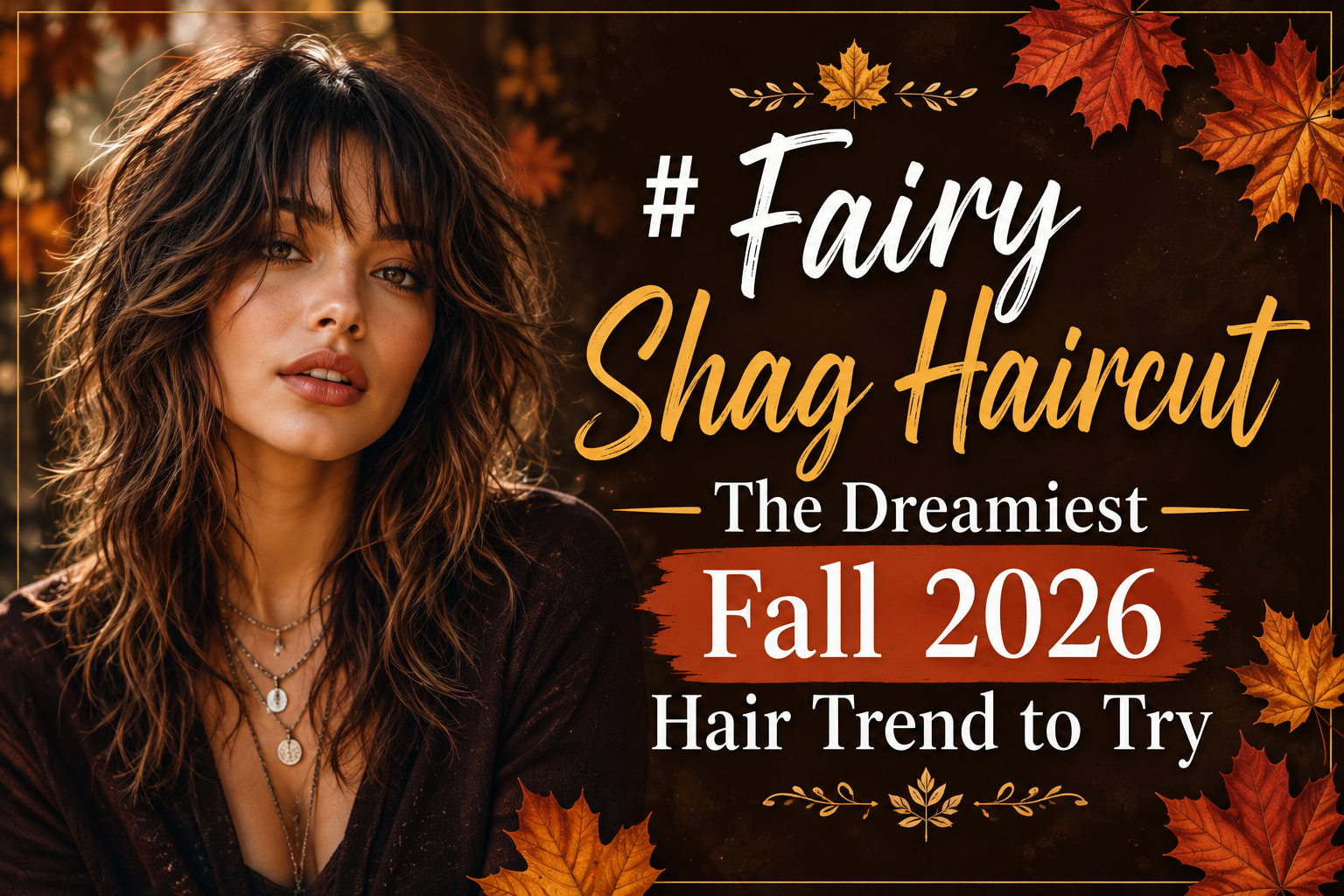
Fairy Shag Haircut – The Dreamiest Fall 2026 Hair Trend to Try
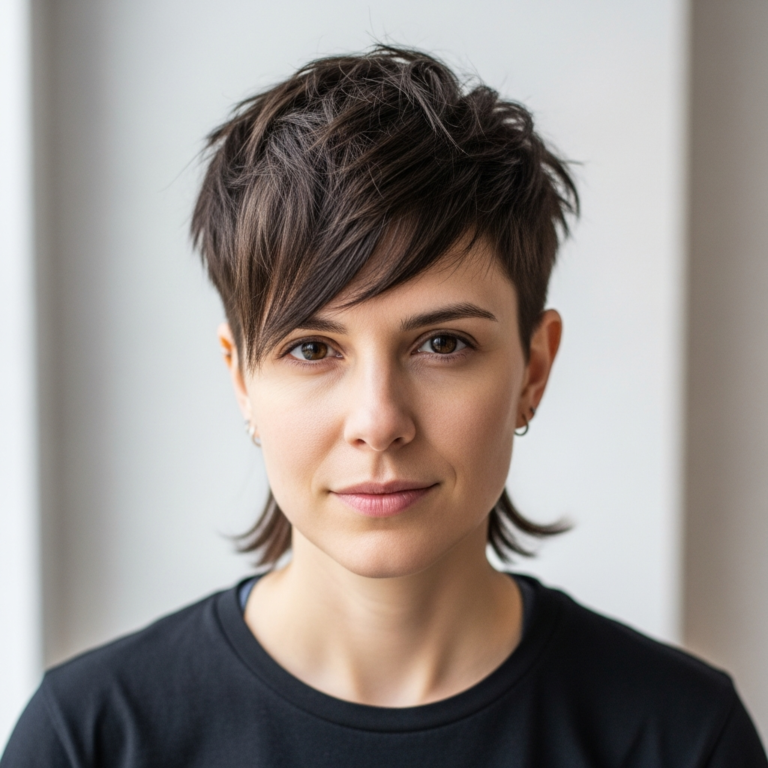
Something is casting a spell over salons this fall, and it’s called the Fairy Shag. It’s less a haircut, more a whole mood — the natural next step from the heavier “wolf cuts” and “mulleots” that dominated the last few seasons. Where those styles leaned rebellious, the Fairy Shag pulls that same 70s shag energy in a softer direction, blending it with the whimsy of “Fairycore” and “Cottagecore.”
What comes out the other end is oddly hard to place: it looks equally at home in a high-fashion editorial and wandering through a misty forest trail. Here’s a full breakdown of the trend everyone’s obsessing over this season.
1. Ethereal Texture
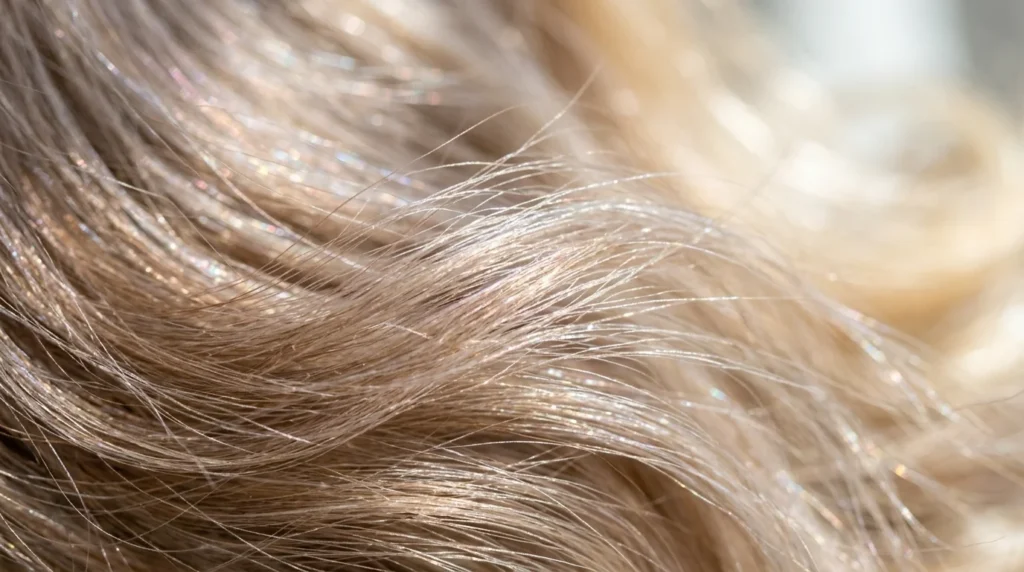
Weightless is the whole point of this haircut. Rather than the chunky, blunt layering that defined the early 2020s, the Fairy Shag for 2026 relies on internal thinning and point-cutting — techniques that let hair actually move with a breeze instead of sitting stiffly in place. The goal is softness you can touch, not the sprayed-stiff look of past decades. Natural waves and curls respond especially well to this approach, since the cut works with the hair’s own pattern instead of flattening it out.
2. Wispy Bangs
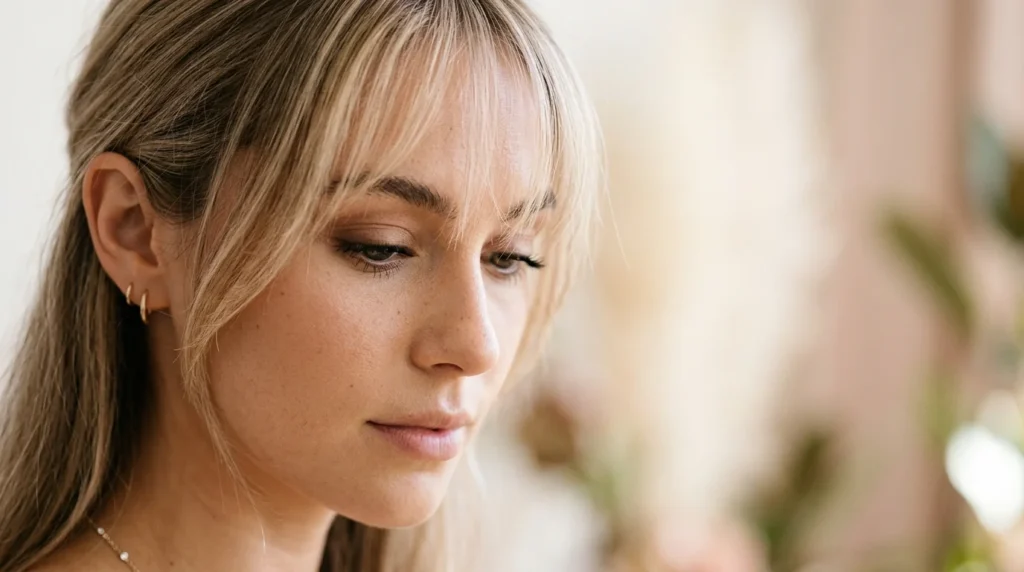
Heavy, eye-skimming fringes that need trimming every few weeks are out. In their place: “bottleneck” or see-through bangs, cut so fine they almost blend into the rest of the hair. They frame the eyes without taking over the face, and — unlike most bangs — they’re built to look better as they grow out, eventually merging into the face-framing layers around them. That quiet, in-between quality is a big part of what makes this cut feel “fairy” in the first place.
3. Face-Framing Wings
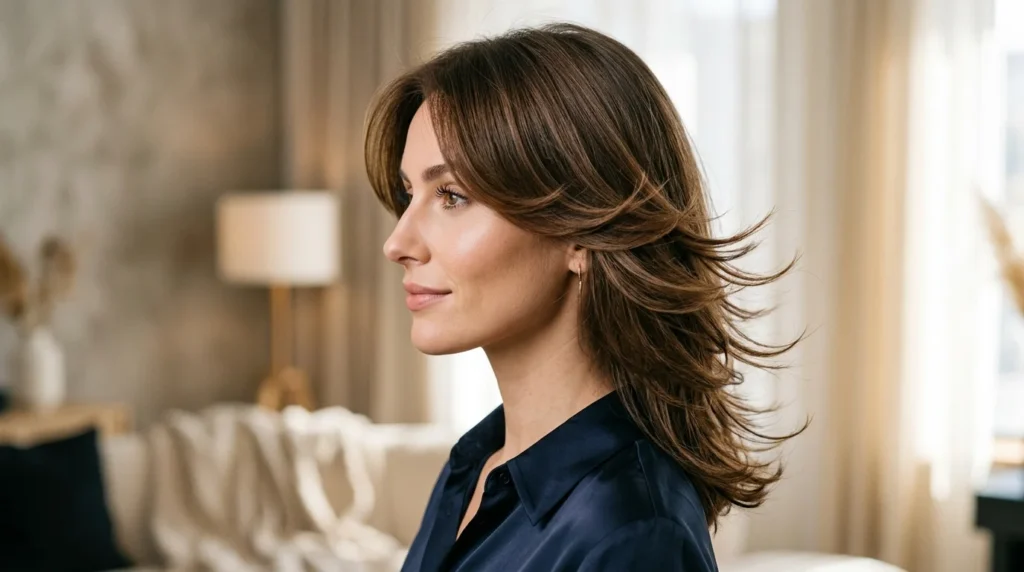
This season’s layers don’t hug the face — they wing outward from it. Cut to hit around the cheekbones and jaw, these pieces are styled to flick out and away, opening up the whole face and adding a kind of architectural lightness. It’s a distant cousin of the old Farrah Fawcett flip, just with far less volume and a much lighter hand. These wings are essentially what gives the cut its airborne, almost weightless silhouette.
4. Pastel Tints
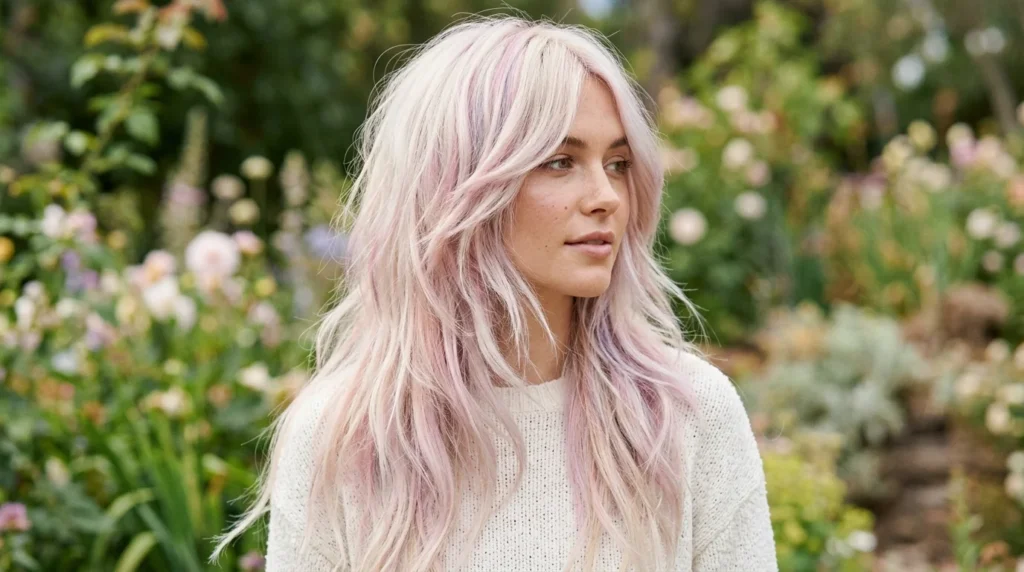
Cut aside, the color choices are doing just as much work here. Bold, saturated shades are giving way to watercolor pastels and earthy washes — dusty rose, muted lavender, moss green, even a soft mushroom-silver. These tend to be applied with a melting technique so subtle it almost reads as a trick of the light rather than an actual dye job. The effect adds even more dimension to the layers, making them look like they’re glowing from within.
5. Woodland Volume

Flat-ironed hair has no place in this trend. Instead, the Fairy Shag chases “woodland volume” — the kind of natural body and lift you’d get from a day spent outside, no styling tools involved. Most of that volume sits at the crown, creating a soft, rounded halo shape. It’s nothing like the aggressive teasing of the 80s; lightweight mousse and salt spray do the real lifting here, encouraging hair to stand slightly away from the scalp for a look that’s romantic but a little untamed too.
6. Tapered Ends
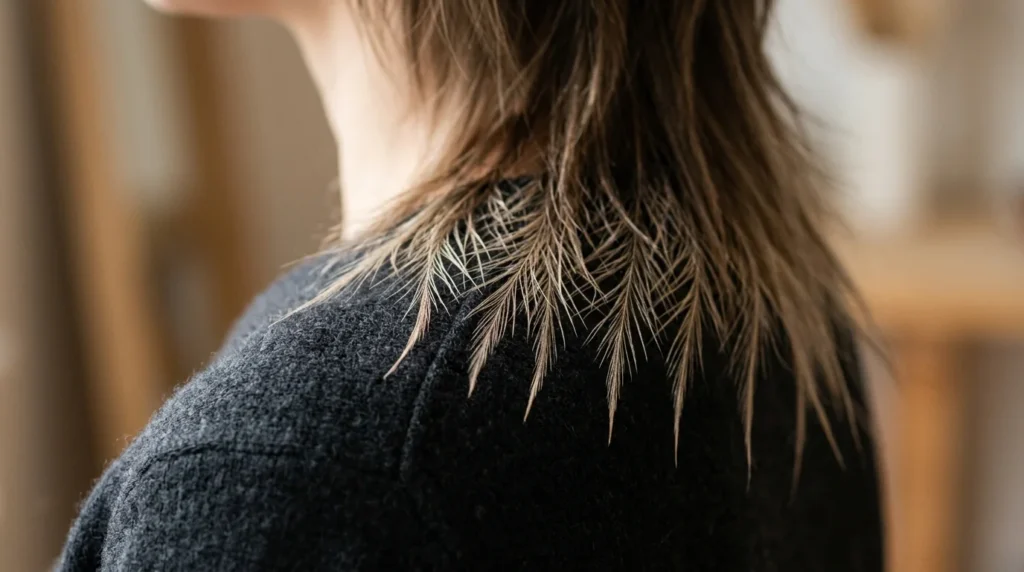
How the hair ends matters just as much as how it starts. Rather than blunt or rounded ends, the Fairy Shag tapers into fine, feathery points — sometimes called “fairy tail” ends. Even on medium-length hair, this makes the whole look read as longer and more delicate, and it keeps the cut from ever feeling bottom-heavy. As a bonus, it’s genuinely easy to maintain at home, since the ends are supposed to look a little uneven and undone anyway.
How to Style the Fairy Shag
Low-maintenance is the whole appeal of this cut, and the styling process reflects that:
- Air-dry first. This cut is built around your hair’s natural movement, so apply a light leave-in conditioner and let it air-dry to roughly 80%.
- Diffuse for lift. A diffuser on low heat, scrunching upward, brings out crown volume and helps those winged layers frame the face properly.
- Go light on product. Skip the heavy waxes and oils — a texturizing mist or dry volume spray keeps everything looking airy and matte instead of weighed down.
- Try the finger-rake method. A brush tends to smooth the shag out too much; raking through with your fingers keeps the layers looking loose and natural.
Is the Fairy Shag Right for Your Face Shape?
Because the layering is customized per person, this cut adapts to just about any face shape:
- Heart-shaped faces: Wispy bangs and winged layers balance a wider forehead against a narrower chin.
- Round faces: Crown height paired with tapered ends adds vertical lines that visually lengthen the face.
- Square faces: Soft, feathered texture softens a strong jawline without hiding it entirely.
- Oval faces: Basically any version works here, from short and choppy to long and flowing.
As the weather cools into late 2026, the Fairy Shag holds its ground as the go-to cut for anyone who wants high-fashion edge without losing softness. It’s an invitation to lean into your natural texture — and maybe add a little magic to an otherwise ordinary routine.